Gulzar Font
Designed by Borna Izadpanah, Fiona Ross, Alice Savoie, Simon Cozens
On Google Fonts since 2022 • Popularity #1116
Quick Summary
1
Styles
400-400
Weight Range
Static
Not variable
3
Languages / Subsets
© 2021 The Gulzar Project Authors
Font Preview
Spotted a Font That Looks Like Gulzar?
Upload a screenshot or image and we'll find the closest matching free Google Font you can preview and download.
Find Font From ImageAbout Gulzar Fonts
Gulzar is a contemporary Urdu Nasta’liq typeface – and its Latin counterpart – designed and developed through a collaboration by Borna Izadpanah (Principal Designer and Project Leader), Simon Cozens (Font Engineering), Alice Savoie (Designer, Gulzar Latin), Fiona Ross (Consultant, Gulzar Urdu), Amir Mahdi Moslehi (Calligraphic adviser, Gulzar Urdu) and Martin Dodds (Consultant, Gulzar Urdu). This typeface was designed to provide an effective textual communication tool primarily for Urdu readers on digital platforms and in print. In Gulzar, the aim has been to produce a typeface which is legible at text sizes and suitable for sustained reading. The first phase of this project involved conducting research into the history of Urdu digital typefaces from the early 1980s. The design of Gulzar was inspired by carefully collected specimens of Urdu calligraphy and lettering which were closely studied to achieve an accurate representation of the Urdu flavour of the Nasta’liq style.
Once the Nasta’liq design was firmly established, a proposal was made for a Latin counterpart that took inspiration from two eminent humanistic references: the versatile and sturdy proportions of Robert Granjon’s types, coupled with the sharp and distinctive feel of Hendrik van den Keere’s work. The Latin letterforms thus feature some subtle references to their calligraphic roots and echo the contrast present in the Nasta’liq, while remaining embedded in their classical typographic proportions.
Gulzar is not the first OpenType Nasta’liq typeface, but it is the first Nasta’liq type for which an original Latin counterpart was designed. It covers all the required transliterations characters to transcribe Arabic, Persian and Urdu languages.
You can read more about the inspiration, design, and engineering of Gulzar at gulzarfont.org.
To contribute, see github.com/googlefonts/Gulzar/.
Who Designed Gulzar?
View all designers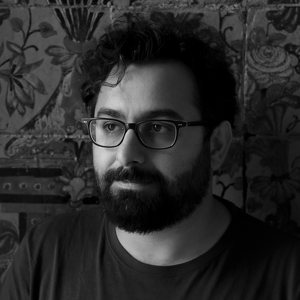
Borna Izadpanah is a Lecturer in Typography at the University of Reading, UK, from where he was also awarded a PhD, and an MA in Typeface Design. His doctoral research explored the history of the early typographic representation of the Persian language. Borna has received numerous prestigious awards for his research and typeface design, including the Grand Prize and the First Prize for Arabic Text Typeface in the Granshan Type Design Competition, a TDC Certificate of Typographic Excellence, and the Symposia Iranica Prize for the best paper in Art History.
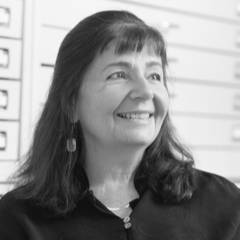
Fiona Ross specializes in type design primarily for Arabic, South Asian, and Thai scripts. She works as a consultant, type designer, author, and Professor in Type Design (part-time) at the University of Reading (UK). Fiona has received the SoTA Typography Award (2014) and the Type Director’s Club Medal (2018).

Alice Savoie is a graduate from École Duperré and École Estienne in Paris, and holds an MA in Typeface Design and a PhD in type history from the University of Reading (UK). Between 2008 and 2010 she joined Monotype as an in-house type designer, working on custom projects for international clients. She is currently based in Lyon, France, and teaches type design at Écal Lausanne (CH) as well as supervising research projects at Atelier National de Recherche Typographique in Nancy (FR). From 2018-2021 she was the principal researcher on the Leverhulme-funded ‘Women in Type’ project at the University of Reading with Prof. Fiona Ross.

Simon Cozens is a font engineer based in Gloucester, UK. He specializes in OpenType layout of complex scripts, and operates Corvel Software, which enables type designers to support the world’s languages.